
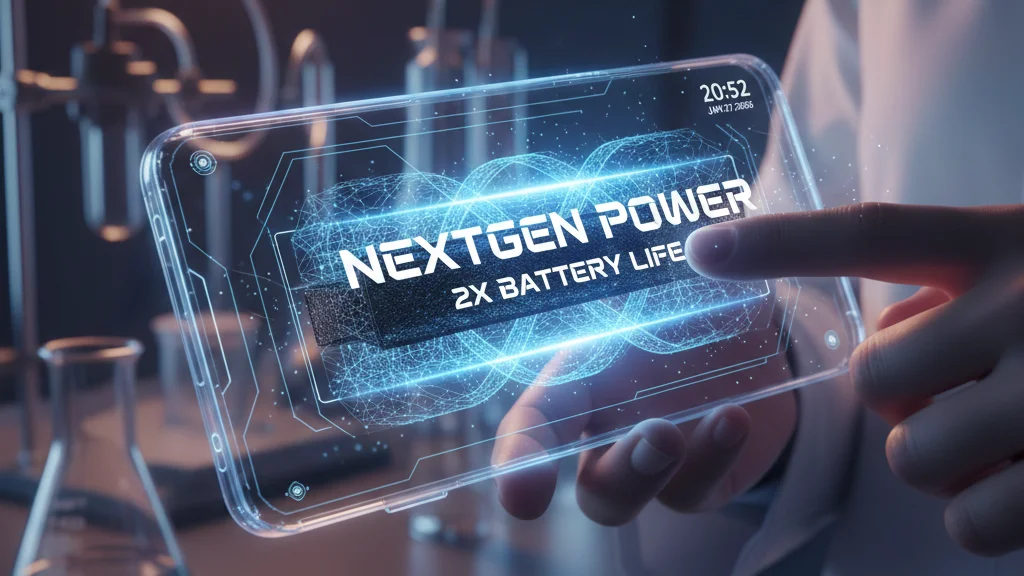
Smartphone users have long struggled with short battery life, but a new breakthrough may finally change that. Silicon-carbon battery technology is emerging as a next-generation solution that could double smartphone battery life while keeping devices thinner and faster to charge.
Major smartphone brands and battery manufacturers are already testing this technology, and experts believe it could soon replace traditional lithium-ion batteries.
What Is Silicon-Carbon Battery Technology?
Silicon-carbon battery technology is an advanced form of lithium battery that replaces traditional graphite anodes with silicon mixed with carbon materials.
Silicon can store up to 10 times more lithium ions than graphite, allowing batteries to hold significantly more energy in the same physical space. The added carbon helps stabilize silicon, solving earlier issues like swelling and degradation.
Why Silicon-Carbon Batteries Are a Big Deal
Compared to standard lithium-ion batteries, silicon-carbon batteries offer several major advantages:
- 🔋 Higher energy density (more power in the same size)
- ⚡ Faster charging speeds
- 📱 Slimmer smartphone designs
- 🔥 Better thermal stability
- ♻️ Longer battery lifespan
This means future smartphones could easily last two full days on a single charge.
How Silicon-Carbon Batteries Improve Smartphone Battery Life
The key benefit of silicon-carbon battery technology is its ability to store more energy without increasing battery size.
For users, this could result in:
- Longer screen-on time
- Better performance for gaming and AI features
- Reduced battery anxiety during travel
Some early tests suggest battery capacity improvements of 15% to 40%, with future versions potentially reaching even higher gains.
Which Smartphone Brands Are Using Silicon-Carbon Batteries?
Several major brands are already experimenting with silicon-carbon battery technology, including:
These companies are focusing on flagship models first, where longer battery life is a key selling point.
| Feature | Lithium-Ion | Silicon-Carbon |
|---|---|---|
| Energy Density | Moderate | High |
| Charging Speed | Standard | Faster |
| Battery Size | Larger | Smaller |
| Lifespan | Good | Better |
| Future Scalability | Limited | High |
This comparison shows why silicon-carbon batteries are seen as the future of smartphone power.
Challenges of Silicon-Carbon Battery Technology
Despite its promise, silicon-carbon battery technology still faces some challenges:
- Higher manufacturing costs
- Limited large-scale production
- Long-term durability testing still ongoing
However, continuous research is rapidly solving these issues.
When Will Silicon-Carbon Batteries Become Mainstream?
Industry experts predict that silicon-carbon batteries will become common in smartphones by 2026, especially in premium and mid-range devices.
As production costs drop, this technology could soon appear in budget smartphones as well.
Final Thoughts
Silicon-carbon battery technology represents one of the most important advancements in smartphone innovation. With longer battery life, faster charging, and slimmer designs, it has the potential to completely change how we use our devices.
As manufacturers continue adopting this technology, smartphone users can finally expect meaningful improvements in battery performance.
Conclusion
If you’re tired of charging your phone multiple times a day, silicon-carbon battery technology may soon offer the solution you’ve been waiting for.